Fateful Triangle by Noam Chomsky
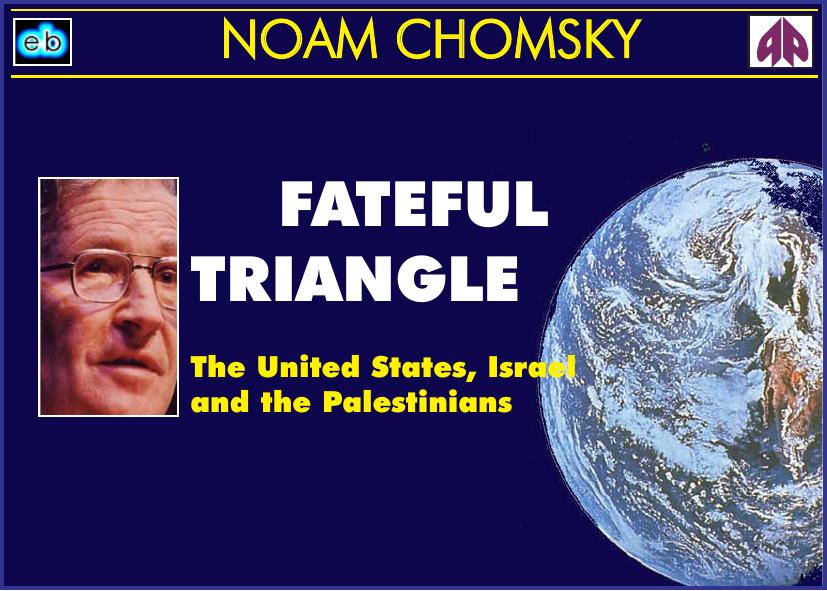
Author:Noam Chomsky
Language: eng
Format: azw3, epub, pdf
Published: 2014-12-01T05:00:00+00:00
O
ne interesting feature of the ideological scene in the summer of 1982 was the attack on the media as pro-PLO and anti-Israel. The charge had often been made before (see chapter 1 first* and
section 4.6.1, for some examples on the part of current New Republic editors), but it was renewed with considerable vigor as the Lebanon war began to appear on television screens and front pages. Television was a particular target of attack, particularly, for its insistence on showing scenes of the siege and bombing of Beirut, not counterbalanced by equivalent scenes of the siege and bombing of Tel Aviv or of parts of Lebanon where peace reigned under military occupation (on the same grounds, one could criticize the British press after the bombing of Coventry for not featuring pictures of parts of the city that remained intact). In a rational world, one would simply dismiss the charge of proPLO and anti-Israel bias as absurd or paranoid, noting the overwhelming evidence of “support for Israel,” racist dismissal of the Palestinians, and suppression of unwanted history across most of the spectrum of opinion and analysis. But we live in this world, so let us consider the matter.
Criticism of the media is certainly a legitimate undertaking, rarely pursued in a serious and intellectually responsible way. But the criticism in this case had some unusual aspects. Critical discussion of the media generally centers on editorializing, in explicit opinion pieces (including editorials) and more important, internal to news reports, where it is often manifested in more subtle ways; or on the selection of items to appear, the emphasis given to various topics, the uncritical acceptance of material that serves ideological needs, the incredible standards of evidence that are erected in the case of material that runs counter to these needs, and so on. There is ample material of this sort, and its significance is vastly underrated, in my opinion. But the criticism in this case was of a novel type. I do not recall a previous charge that correspondents on the scene were systematically misrepresenting what was happening before their eyes. On the contrary, even the harshest critics of the press in the past have always emphasized the generally highly professional standards of foreign correspondents in presenting what they found—though what they were looking for, and how they interpreted it, are often another matter.
In the present case, however, we find such criticisms as this, emblazoned on the front cover of the New Republic: Much of what you have read in the newspapers and newsmagazines about the war in Lebanon—and even more of what you have seen and heard on television—is simply not true.243
So we are informed on the authority of Martin Peretz, who was there— on a guided tour with an Israeli military escort. It is, of course, possible that the news presented here was contrived so skillfully that much of what we had actually seen, and what we had read in the reports of usually reliable correspondents, did not happen, but was fabricated for the occasion.
Download
Fateful Triangle by Noam Chomsky.epub
Fateful Triangle by Noam Chomsky.pdf
This site does not store any files on its server. We only index and link to content provided by other sites. Please contact the content providers to delete copyright contents if any and email us, we'll remove relevant links or contents immediately.
| Arms Control | Diplomacy |
| Security | Trades & Tariffs |
| Treaties | African |
| Asian | Australian & Oceanian |
| Canadian | Caribbean & Latin American |
| European | Middle Eastern |
| Russian & Former Soviet Union |
The Secret History by Donna Tartt(19105)
The Social Justice Warrior Handbook by Lisa De Pasquale(12197)
Thirteen Reasons Why by Jay Asher(8921)
This Is How You Lose Her by Junot Diaz(6894)
Weapons of Math Destruction by Cathy O'Neil(6285)
Zero to One by Peter Thiel(5808)
Beartown by Fredrik Backman(5769)
The Myth of the Strong Leader by Archie Brown(5513)
The Fire Next Time by James Baldwin(5454)
How Democracies Die by Steven Levitsky & Daniel Ziblatt(5225)
Promise Me, Dad by Joe Biden(5157)
Stone's Rules by Roger Stone(5091)
A Higher Loyalty: Truth, Lies, and Leadership by James Comey(4967)
100 Deadly Skills by Clint Emerson(4932)
Rise and Kill First by Ronen Bergman(4797)
Secrecy World by Jake Bernstein(4756)
The David Icke Guide to the Global Conspiracy (and how to end it) by David Icke(4724)
The Farm by Tom Rob Smith(4517)
The Doomsday Machine by Daniel Ellsberg(4493)
